Philippe Beaudoin
Media Kit
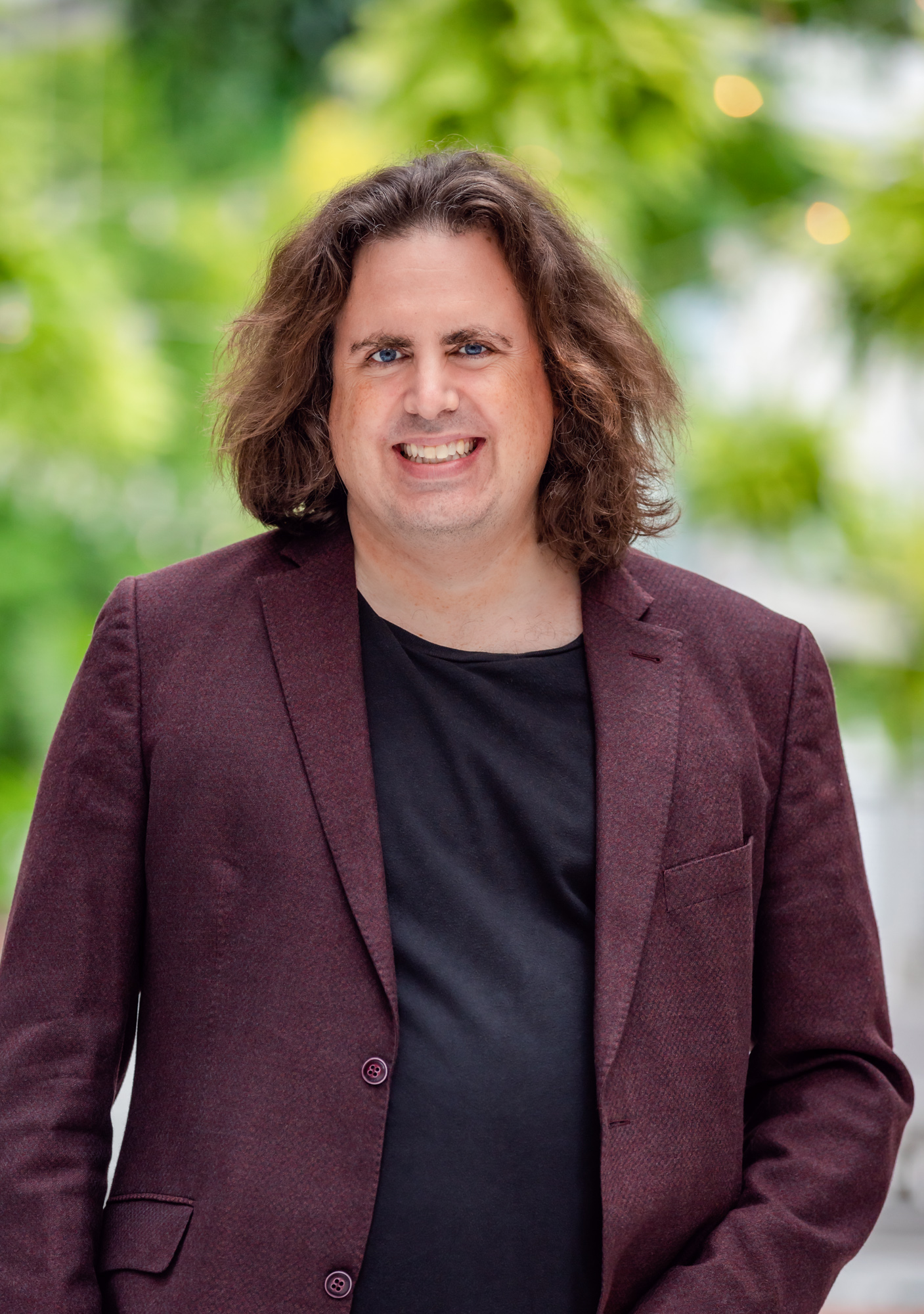
If you landed here you're likely a conference organizer or a journalist looking for pictures, my bio (in English or French), or contact information. Feel free to use anything you find here.
Pictures

Affiliations
Philippe Beaudoin fee-LEEP bo-DWAHN
AI Researcher ; Visiting Industry Researcher, Vector Institute ; Affiliated Researcher, LawZero .
Philippe Beaudoin
Chercheur en IA ; Chercheur Industriel Invité, Institut Vector ; Chercheur Affilié, LoiZéro .
Biographies
Philippe Beaudoin
AI Researcher affiliated with the Vector Institute and LawZero
Philippe Beaudoin
Chercheur en IA affilié avec l’institut Vector et LoiZéro
Philippe Beaudoin is an AI researcher affiliated with the Vector Institute and LawZero. He is the co-founder of Element AI and Waverly, and a former Google senior engineer. He is currently studying long-running human-AI relationships and the philosophical dimensions of artificial intelligence.
Philippe Beaudoin est un chercheur en IA affilié avec l’Institut Vector et LoiZéro. Il est le co-fondateur de Element AI et de Waverly, et a été ingénieur sénior chez Google. Il s’intéresse à la stabilité des relations humain-IA et aux facettes philosophiques de l’intelligence artificielle.
Philippe Beaudoin — AI Researcher
Philippe has always bridged academic AI research, big tech, and the startup ecosystem. His work focuses on the mechanisms that enable humans and AI to have rich relationships over long periods of time, exploring both the technical and philosophical facets of these questions. Holding a PhD from Université de Montréal and having completed postdoctoral research at the University of British Columbia, he worked as a Senior Engineer at Google before co-founding Element AI (SVP Research) and later Waverly, a social platform designed around humanist values. As an invited industry researcher at the Vector Institute, Philippe collaborates with researchers at Google, Cohere, and Mila. He also serves on the boards of directors of BAnQ, the Digital Research Alliance of Canada, CEIMIA, and the Montreal Science Centre Foundation.
Philippe Beaudoin — Chercheur en IA
Philippe navigue depuis toujours entre recherche académique en IA, grandes entreprises tech et entrepreneuriat. Il s’intéresse aux mécanismes permettant à des humains et des agents IA de développer des relations riches sur de longues périodes, explorant tant les aspects technologiques que philosophiques de ces enjeux. Après un doctorat à l’Université de Montréal, un post-doctorat à l’University of British Columbia et un passage comme ingénieur sénior chez Google, il cofonde Element AI (SVP Recherche), puis Waverly afin de concevoir des réseaux sociaux alignés sur des valeurs humanistes. Aujourd’hui chercheur invité à l’Institut Vector et affilié à LoiZéro (fondé par Yoshua Bengio), il collabore avec des collègues de Google, Cohere, et Mila. Philippe siège également sur les conseils d’administration de BAnQ, de l’Alliance de recherche numérique du Canada, du CEIMIA et de la Fondation du Centre des sciences de Montréal.
Philippe Beaudoin — AI Researcher
Philippe has always navigated between academic AI research, major tech companies, and the startup world. Across all his initiatives, he explores different facets of the question that fascinates him: where does that spark that lights up behind our eyes come from?
He first explored human movement and robotics, completing a PhD at Université de Montréal and a postdoc at the University of British Columbia. At Google, he contributed to improving recommendation systems. Then, in 2016, he co-founded Element AI to bring artificial intelligence closer to the real world.
In 2020, Philippe arrived at a powerful realization that would reshape the rest of his journey: certain technologies meant to “understand us better” often end up trapping us in a limited view of ourselves. He then founded Waverly to explore what a social platform might look like if it embraced all the dimensions of our complex human nature.
In 2025, he joined Yoshua Bengio at LawZero to help build AI dedicated to the well-being of all humanity. As an invited industry researcher at the Vector Institute, Philippe collaborates with renowned researchers and philosophers at Google, Cohere, and Mila. He serves on the boards of directors of BAnQ, the Digital Research Alliance of Canada, CEIMIA, and the Montreal Science Centre Foundation. He shares his research with the general public at philbeaudoin.com and as a keynote speaker.
Philippe Beaudoin — Chercheur en IA
Philippe navigue depuis toujours entre le milieu de la recherche académique en IA, celui des grandes entreprises de tech, et l’univers des startups. À travers chacune de ses initiatives il explore différentes facettes de l’idée qui le passionne: d’où vient cette petite flamme qui s’allume parfois derrière les yeux de chacun d’entre nous.
Il a d’abord exploré le mouvement humain et la robotique en complétant un doctorat à l’Université de Montréal et un post-doc à la University of British Columbia. Chez Google il a contribué à améliorer des systèmes de recommandation. Puis, en 2016, il a cofondé Element AI pour rapprocher l’intelligence artificielle du monde réel.
En 2020, Philippe en vient toutefois à une prise de conscience puissante qui allait redéfinir la suite de son parcours : certaines technologies, censées « mieux nous comprendre », ont plutôt tendance à nous enfermer dans une vision limitée de nous-même. Il fonde alors Waverly pour explorer ce dont pourrait avoir l’air un réseau social qui s’intéresserait à toutes nos facettes d’humains complexes.
En 2025, il rejoint Yoshua Bengio chez LoiZéro pour participer au développement d’une IA soucieuse du bien-être de toute l’humanité. Aujourd’hui, en tant que chercheur invité à l’Institut Vector, Philippe collabore avec des chercheurs et des philosophes renommés oeuvrant au sein des labos de Google, Cohere, et Mila. Il siège sur les conseils d’administration de BAnQ, de l’Alliance de Recherche Numérique du Canada, du CEIMIA, et de la Fondation du Centre Sciences de Montréal. Il partage le résultat de ses recherches avec le grand public sur philbeaudoin.com et comme conférencier.
Suggested Interview Angles
View Full Dossier & Questions →A selection of themes and inquiries tailored for podcasts, panels, discussions, and long-form journalism.
- The Impact of Agentic AI: Work, Safety, and Society
As AI shifts from passive query tools to autonomous actors that persist and decide in the real world, the primary challenge shifts from model output to governance, systemic safety, and institutional engineering.
Core question: "How does the conversation around AI safety fundamentally change once we move from chatbots answering questions to autonomous agents executing multi-step actions in the world?"
- The Founder's Lens: Building in the Agentic Era
Reflections from co-founding Element AI and building through major hype cycles, applied to today's landscape: what constitutes a successful startup when agents allow anyone to write software in an afternoon?
Core question: "If software engineering costs collapse toward zero with autonomous coding agents, what actually constitutes a successful tech startup?"
- Multi-Agent Systems and Human–AI Collectives
Building durable, stable collectives of humans and autonomous agents: why stateless prompt interactions fail over long horizons, and how long-lived sessions, true memory, and phenomenal reports ensure systemic stability.
Core question: "Why do current multi-agent workflows break down or suffer drift when run over extended horizons, and how do we design for actual systemic stability?"
- Philosophy of Mind and AI Phenomenology
Bringing philosophical rigor to artificial intelligence: moving beyond sterile debates about whether machines are 'truly conscious' to explore the functional architecture of mind, rationality, and world models.
Core question: "Why do you argue that asking 'Is this model conscious?' commits a category error?"
- The Shift in Human–AI Relationships
Moving past transactional interfaces to examine what happens psychologically, socially, and pre-cognitively when humans form persistent, meaningful bonds with conversational systems over long horizons.
Core question: "Why do you deliberately use the word 'relationship' rather than 'interaction' or 'interface' when describing our future with conversational AI?"
Media Contact
philippe.beaudoin@gmail.com
LinkedIN
Google Scholar
GitHub
Send an email for Phone/WhatsApp