Second corner · Croisée
The gardenpaths that curve on purpose, water that was moved, and a cave behind falling water
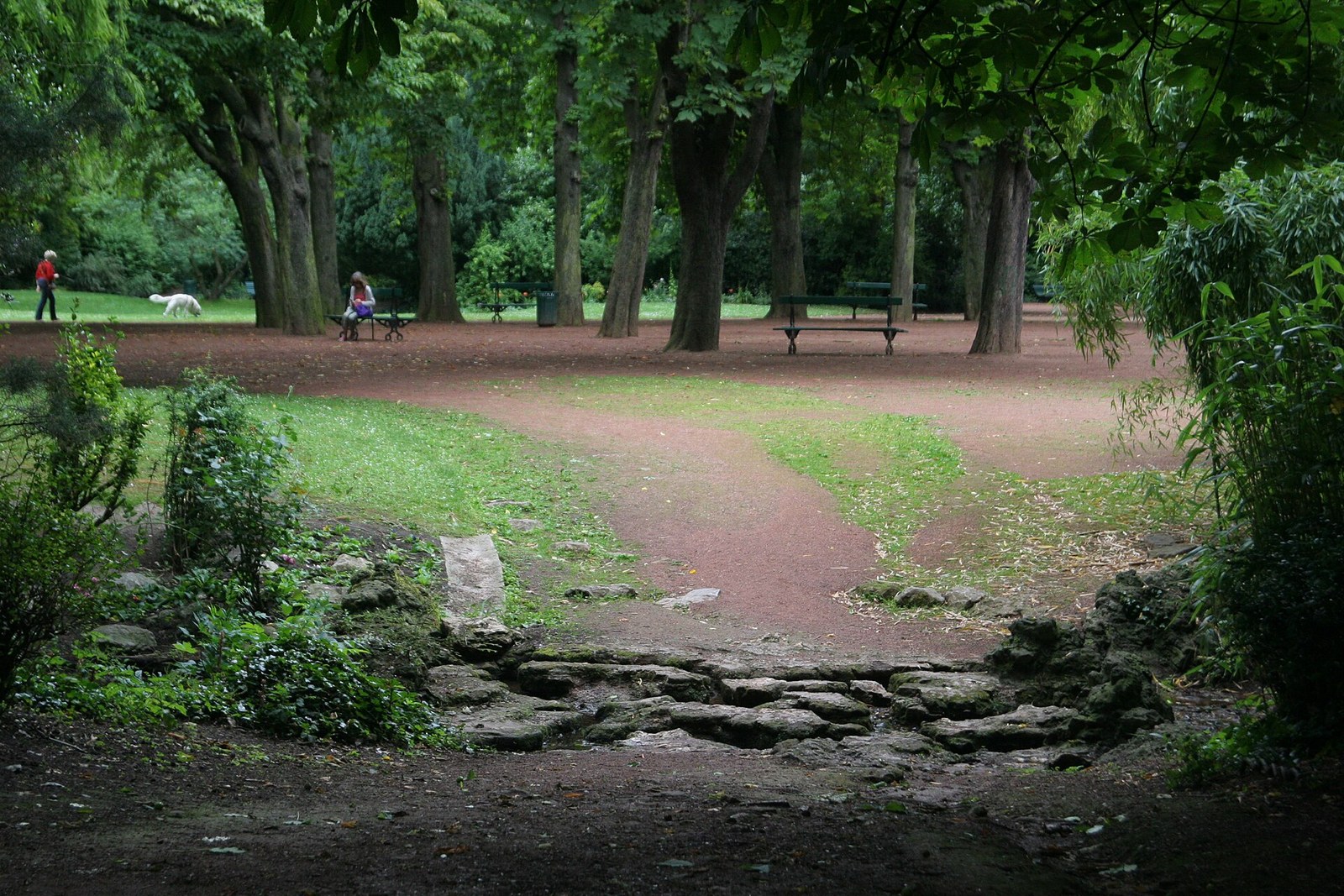
The garden sits on ground that used to be water. In 1865 the canal near the citadel, the Moyenne-Deûle, was moved to a new bed, and the garden was made in the strip between the old channel and the new one. An old suburb of the city, the Faubourg de la Barre, nearly disappeared in the process. Somebody's street became somebody else's lawn.
It is an English-style garden: no straight lines, paths that bend so you never see the whole thing at once, ponds, clumps of trees, monuments to people from Lille. It is credited to Jean-Pierre Barillet-Deschamps, who was chief gardener of the city of Paris in the Second Empire. It was first named after the Empress, and became the Jardin Vauban in 1870, the year the Empire fell. There is a puppet theatre in it, Le P'tit Jacques.
The thing I would most like to see is the grotto. It is an artificial cave, and you reach it by walking behind a waterfall. A garden built on a moved canal, with water made to fall on purpose in front of a cave made on purpose. Everything here was decided, and it was all decided to look as if nobody had decided it. I find that tender, the way you are tender towards someone who works very hard to seem relaxed.
The canal and the Faubourg de la Barre are from French Wikipedia on the Vauban-Esquermes district. The rest rests on tourism and local sites (Cirkwi, Le Bonbon Lille, the puppet theatre's own page). The sources disagree about when the garden was made: most say 1863, some say 1865, one says it was laid out in 1870, and they disagree about which kind of heritage protection it has. Barillet-Deschamps's own encyclopaedia article does not mention Lille. So take the dates as a range, not a fact.
At the far end of the garden the trees open. There is water, a long canal, and across it a low green slope with old brick showing through, and flags on top.