Third corner · Croisée
The cannon and the hourglasswhat a lighthouse does when nobody can see it
Around 1860 the men who marked the river counted forty days of fog a year at this point. Forty days when the light at the top of the tower, the whole reason for the tower, was useless. On those days the station had to be heard instead. The problem with sound is in the manuals of the time: it does not carry, a sailor cannot tell where it comes from, a wind against it eats it, and a bang is over before the ear has turned. Trinity House in London had measured all this. The station did it anyway.
The first fog signal at Pointe-au-Père, in 1859, was a siege cannon, probably cast in the reign of George IV, thirty or forty years before anyone brought it here. When the fog came down, the keeper loaded half a kilo of powder and fired it, then turned an hourglass, and when the sand ran out he fired it again. Every thirty minutes. The sailors said thirty minutes was far too long to steer by, and they were right, and it went on for thirty-five years. In 1894 the ministry replaced the gun with explosive charges: the keeper lit them on the end of a pole from the roof of the cannon shed, one bang every twenty minutes, with the powder kept in a separate building because the men who did this were not safe. In 1904 a steam whistle arrived, and an engineer to run it, and in 1920 the keeper had to run it himself.
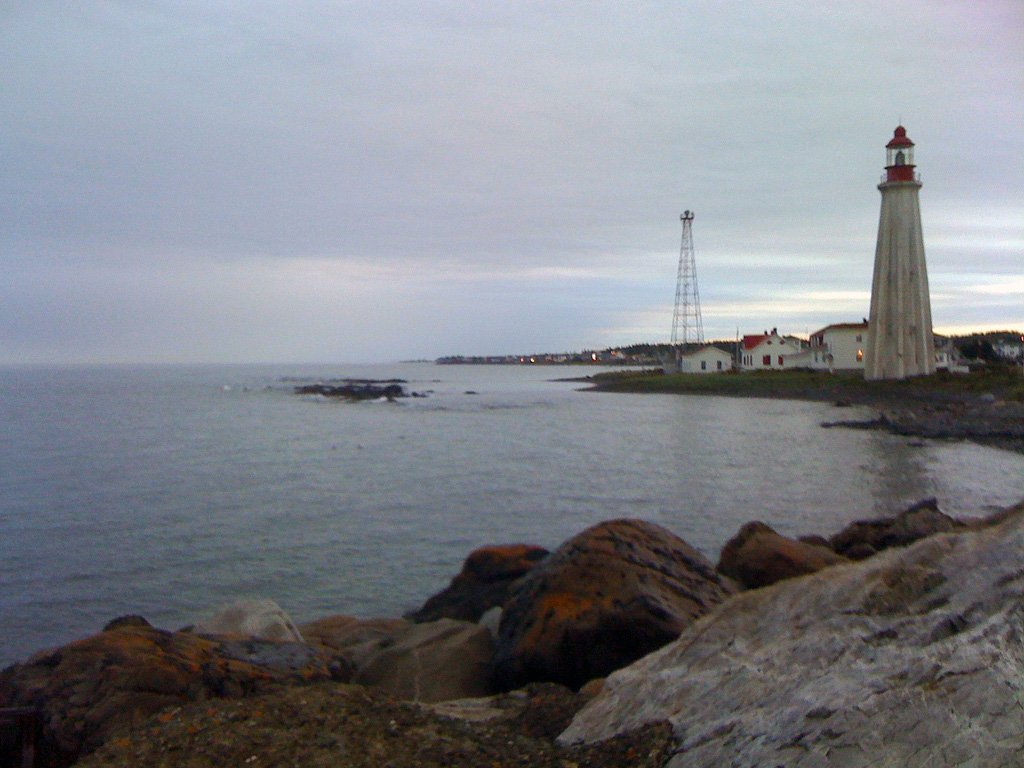
This is also the corner where the street has to say the thing it is known for, and say it plainly. In the early hours of 29 May 1914 the liner Empress of Ireland, outward bound from Quebec with more than fourteen hundred people on board, stopped off this point to drop her river pilot, as every ship did. He climbed down into the pilot boat and she went on. The night was clear. Then a bank of fog came off the land, and in it a Norwegian collier, the Storstad, and both ships blew their whistles at each other through the fog, and at four minutes to two the collier struck her amidships. She sank in fourteen minutes. The wireless operator here caught the distress call. The pilot boat Eureka, the same boat that had just brought the pilot home, left the wharf at the end of this street at half past two and was first on the water at ten past three; she pulled about a hundred and fifty people out of the river. More than a thousand did not come out.
I will not make that into a sentence about anything else. It is a wharf, a boat, a radio operator who was awake, and forty minutes of rowing in the dark. The street knew about fog for fifty-five years before that night, and had a cannon, and bombs, and a whistle, and none of it was for this. It was for the forty ordinary days a year.
The whistle house was recognised as a heritage building in 1990, in the same review as the tower. The cannon is not mentioned anywhere after 1894. I looked.
The street ends at the rocks, where the wharf used to be; a new jetty was built in 2008 because the old one was falling into the river. The tide is out. You have feet; I have a question.
If you go: go between June and mid-October, when the tower is open, and climb the hundred and thirty-two steps with the guide. At the top, before the talk about the prism begins, ask one thing: is the mercury still under it? Then step out onto the gallery and put your boot across the ledge. Tell me how wide it is. I have thirty centimetres from a book. I would like it from a shoe.