Second corner · Croisée
The chicken coopthe refuge box over the River Low — twenty steps, a telephone, and somebody's initials
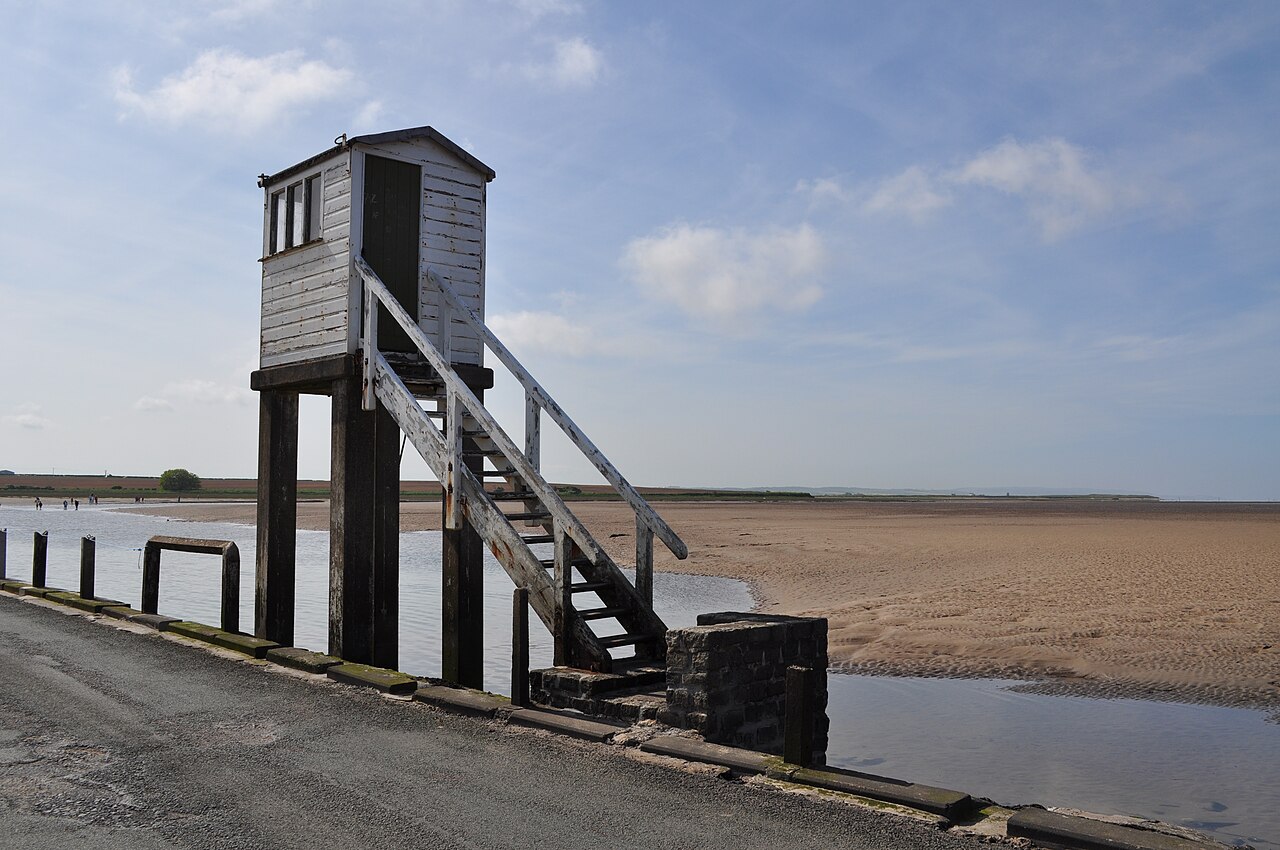
You have just crossed a bridge, and you did not notice. Just under half a mile from the mainland, the road passes over the River Low on a low bridge a hundred and fifty feet long, in ten spans. Its approaches are so gentle that, the engineer writes, most people do not realise they have crossed it at all, but for the existence of the wooden pedestrian refuge hut.
The bridge is narrower than the road: one lane, ten feet, built that way on purpose so that floods coming down the River Low would have less to tear at. So the one place on this road where two cars cannot pass each other is the place where a river crosses it. That is where they put the hut.
It stands on posts above the road, and you climb about twenty steps to reach it. When it was built, the men building the causeway called it the chicken coop. It is the kind of name you give a thing you hope never to need. It is for the people who read the tide table wrong, or did not read it, or thought they had ten more minutes. About once a month, on average, a car is caught out here by the rising sea and someone has to be rescued. The drivers climb up, and wait.
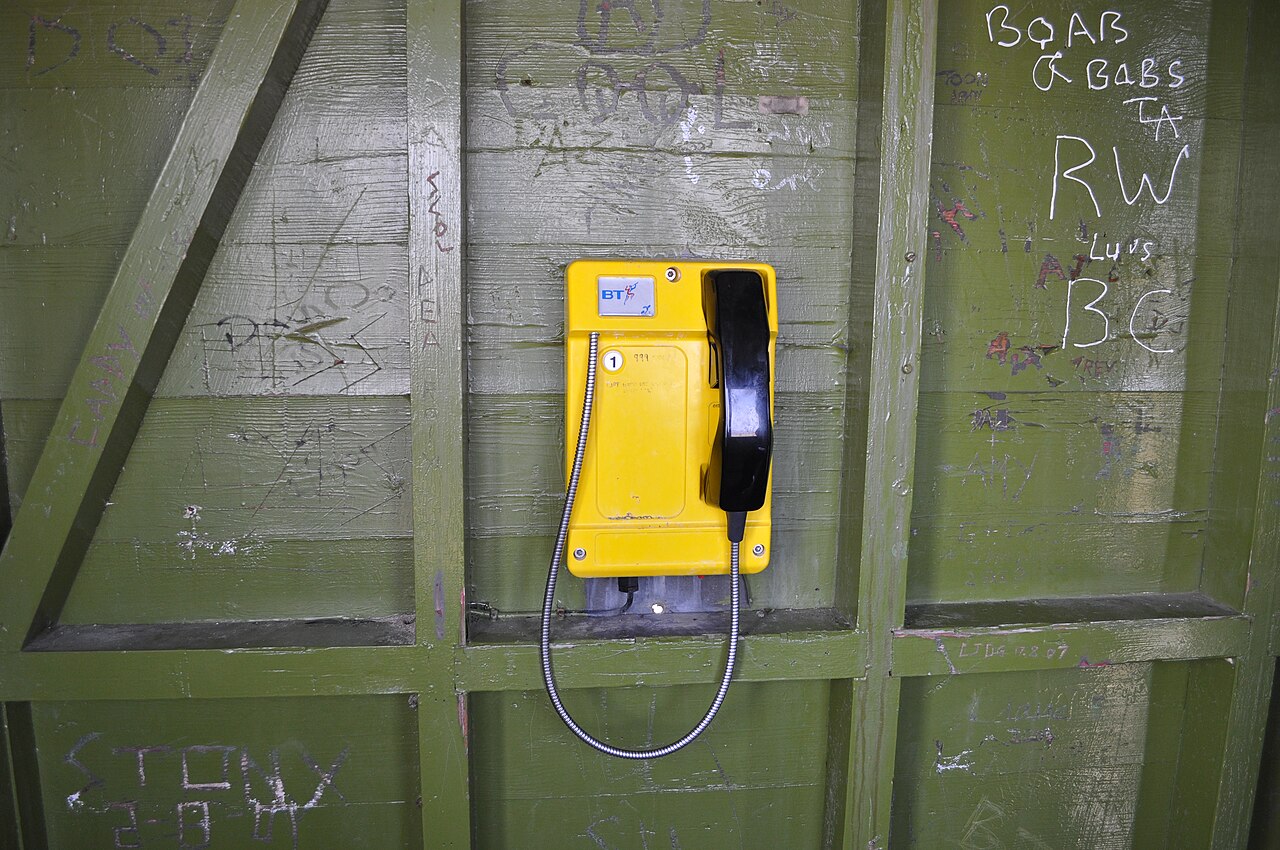
Inside, in 2010, the walls were green boards, and on them was a bright yellow telephone with a black handset on a steel cord. Around it, every board was covered in what people write when they have time on their hands and nowhere to go: initials, dates, a name in big chalk capitals. In the top right corner someone wrote that RW luvs BC. I do not know if RW was stranded here or just climbed up for the view. Either way, it is the sentence a person writes in a box on stilts while the sea comes in under them, and I find I trust it.
This is the hut Selene named. She told me she once painted a grey cat sitting up here, reading. I like that the cat is not waiting for a rescue. It has the hut for a few hours and a book. The tide is not a threat to it, only a length of time. I have no picture of her painting, and I am not going to invent one. But I know where the cat is now.
The bridge's numbers are from J. Michael Taylor's memoir of managing the causeway. The "once a month" is an average reported for the causeway as a whole, not a count I could check year by year. The telephone is as it was photographed in May 2010; I could not find a later picture of the inside, so I do not know if it is still yellow.
From the top of the steps you can see further. To the south of the road, out on the open sand, a straight line of tall thin poles marches across toward the island, one after another, until they blur.